Road Trip to Hana 2026: Skip the Stress, Hire a Guide
You're driving a narrow, winding road with zero guardrails, your GPS has lost signal, and a one-lane bridge is coming up fast with a truck headed straight at you from the other side. Welcome to the Road Trip to Hana, Maui's most iconic drive. Yes, it is breathtaking. But it can also be a lot to handle on your own. In 2026, the rules of the road have changed and knowing them before you go could make or break your entire Maui experience.

What's New on the Road Trip to Hana in 2026?
This year marks 100 years since the Hana Highway was first completed. It's a big deal, and Maui is treating it that way. Hawaii's Tourism Authority has officially named the Road to Hana as a top overtourism hotspot in its 2026–2028 Destination Management Plan.
Maui welcomed 236,180 visitors in January 2026 alone, up 16.7% from 2025, fueling Road to Hana demand. That means tighter parking rules, new no-access signs at popular trails, and a stronger push for responsible travel. On top of that, recent storms left parts of the road temporarily closed. The good news? The road is fully open now, and those heavy rains made the waterfalls more powerful and the forests greener than ever.
Why the Road Trip to Hana Demands a Local Expert?
In 2026, the Road to Hana requires advance reservations just to park at Waiʻānapanapa Black Sand Beach. There are no fresh no-parking zones throughout the route. And at one-lane bridges, there's an unwritten local rule; five to six cars cross before the opposite side gets a turn. Cut in line, and you'll have frustrated locals on your hands.
Swimming at the waterfalls carries real risk, too. Flash floods can start far up the mountain even when the sky above you is clear. Only a guide who monitors water levels daily can tell you when it's truly safe to jump in.
What Does the Road to Hana Waterfalls Tour with Stardust Hawaii Include?
Stardust Hawaii has been running this tour for over a decade, and it shows in every detail.
Luxury travel in a Mercedes Sprinter Van
Forget gripping the steering wheel through 620 curves. You ride in a spacious and air-conditioned Mercedes Sprinter Van with wide viewing windows and room for just 14 guests. Hotel pickup and drop-off are included.
Hidden waterfalls, black sand beaches & swimming stops
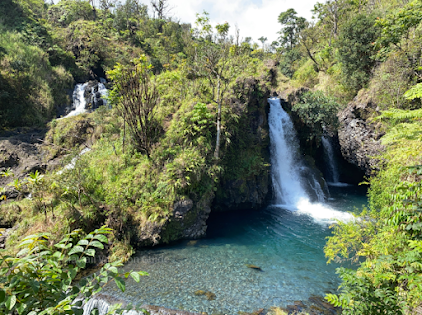
Your guide takes you to Pua'a Ka'a Falls and the famous Black Sand Beach; stops that are easy to miss or mistime on a self-drive. Weather permitting, you can swim at both.
Meals, local stories & cultural connection
A light breakfast is served on board. Lunch: fresh deli sandwiches, local fruit, and Hawaiian drinks are enjoyed at a scenic spot near Hana Town. Along the way, your guide shares real Hawaiian history, local legends, and the spirit of Mālama Maui, which means caring for the island.
When is the Best Time for a Road to Hana Maui Trip?
Start early, ideally before 7 AM. This helps you beat the tour buses and catch softer morning light at the waterfalls. Post-rain season, like right now, is one of the best times to go. The landscape is lush, the falls are roaring, and the route feels truly alive.
Book Your Road Trip to Hana with Stardust Hawaii
The Road Trip to Hana is one of those places that stays with you long after you leave Maui. The mist off the falls, the taste of fresh local fruit, the stories your guide tells at every turn; it all adds up to a day you won't forget.
Stardust Hawaii makes sure every part of it is easy, safe, and genuinely special. Skip the stress of driving it alone. Book your spot on the Road to Hana Waterfalls Tour today and let the experts show you Maui at its best.
FAQs
Q1. Is the Road Trip to Hana worth it in 2026?
Ans. Absolutely, but it's more complex than it used to be. New parking rules, trail restrictions, and safety concerns make a guided tour a smarter choice than ever.
Q2. Can you swim on the Road to Hana Maui tour?
Ans. Yes, swimming stops are included at the Black Sand Beach and Pua'a Ka'a Falls, weather and conditions permitting.
Q3. What should I bring on a Road to Hana Maui Trip?
Ans. Pack sunscreen, a hat, a light change of clothes, and a camera. Everything else, food, water, and local knowledge, is taken care of.


Comments
Post a Comment